
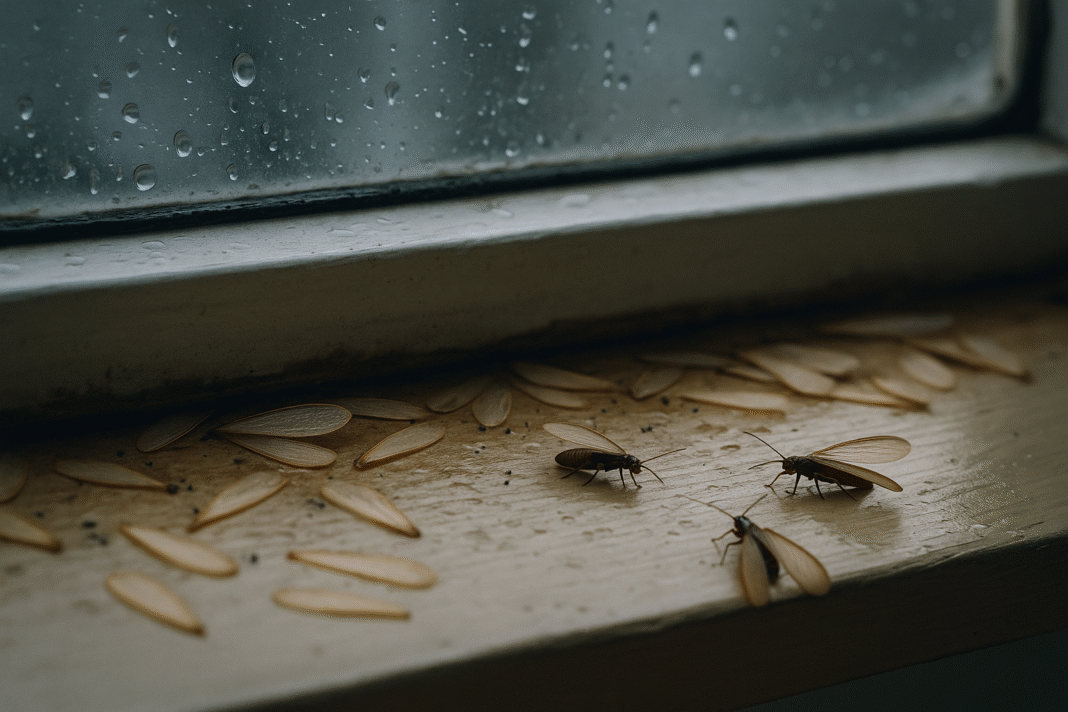
Flying termites, also called swarmers or alates, are the reproductive stage of a termite colony. They take off in large groups to find mates and start new nests. Swarms usually appear in the evening after warm, humid weather or a burst of rain. You might spot them circling lights, gathering on window sills, or shedding wings near door frames.
Their arrival is a warning sign. A swarm can indicate hidden activity inside or near your home. Termites target timber frames, roof spaces, skirting boards, and subfloors. Left alone, they can hollow out wood from the inside, causing costly structural damage.
If you are seeing swarmers around doors, windows, or lights, you may need advice from pest control in Sydney early in the season. Acting quickly helps you confirm whether they are termites, map where they entered, and plan the proper treatment before the next round of warm weather brings another swarm.
Do #1: Identify them correctly
Getting the ID right is the first step. Flying termites look a lot like flying ants at a glance, but a few simple checks will tell them apart.
- How to tell flying termites from flying ants
- Wings: Termites have two pairs of wings that are the same size and longer than the body. Ants have front wings that are larger than the back pair.
- Antennae: Termites have straight, bead-like antennae. Ants have elbowed antennae with a clear bend.
- Waist shape: Termites have a thick, straight waist. Ants have a narrow, pinched waist.
- Wing behaviour: Termite wings are delicate and often fall off in piles near windowsills, light fittings, and door frames. Ant wings are tougher and shed less often.
- Why correct ID matters
- Termites can damage timber from the inside, which needs a very different response to ants.
- Using the wrong spray or bait can scatter swarmers without fixing the colony.
- Correct ID lets you move quickly to the right inspection and treatment plan.
- Quick checklist
- Take clear photos of the insect and any shed wings. Place a coin or ruler beside them for scale.
- Collect a few samples in a small, clear bag or container.
- Note the date, time, weather, and the exact spots where you saw activity, such as lounge room windows, porch lights, or the bathroom exhaust.
Don’t #1: Don’t ignore a swarm inside
An indoor swarm is a warning sign that a nest may be active nearby. Note what you see and act quickly.
- What do piles of wings and frass mean
Heaps of shed wings near lights or windows, and powder-like frass by skirting or joins, suggest termites are moving through hidden galleries.
- Risks of delay
- Hidden timber damage that grows out of sight
- Repairs that get expensive as damage spreads
- Activity moving into other rooms or adjoining units
Contain the area, keep a few samples, and book a professional inspection soon.
Do #2: Act Fast To Reduce What Attracts Them
Cut the things that draw swarmers in and make your home less welcoming.
- Manage lighting at dusk
- Turn off outdoor lights where you can. Close curtains and use warm bulbs indoors. Bright white light pulls swarmers toward windows and doors.
- Shut entry points during peak times
Close windows and doors when you see activity. Fit fine-mesh screens and repair any tears.
- Fix leaks and damp areas
Check under sinks, around toilets, showers, and air conditioners. Repair drips, dry wet cupboards, and wipe up condensation.
- Improve airflow
Ventilate subfloors and roof spaces. Clear vents, add passive vents if needed, and keep these areas dry.
- Store firewood correctly
Stack firewood off the ground on a rack. Keep it well away from external walls and do not store it in the garage.
- Tidy gardens near the house
Keep mulch thin and garden beds low. Make sure soil and plants do not cover weep holes. Leave a clear visual gap around the base of walls.
- Seal small gaps
Use a suitable sealant around pipes, cables, window frames, and door jambs. Focus on tidy, continuous seals to cut off easy access.
Don’t #2: Don’t reach for random surface sprays
Quick sprays feel handy, but they rarely solve a termite problem.
- Aerosols scatter swarmers
Household sprays only hit what you can see. The colony stays untouched and keeps feeding.
- Short-term kill hides activity.
Dead insects near lights can make you think the issue is fixed while termites keep working inside timber.
- Chemicals can clash with treatments
Some products leave residues that reduce the effectiveness of professional baiting or soil work later.
- Do this instead
Collect photos and a few samples, note where and when you saw them, and book a licensed inspection. This gives you a proper plan that targets the colony.
Do #3: Capture evidence and map activity
Good records help your inspector find the source faster and plan the right fix.
- Photograph what you see
Take close-up photos of insects, shed wings, and any fine powder. Place a ruler or coin beside the item so size is clear.
- Write down the details
Note the date, time, recent weather, and the exact rooms or outdoor spots where you noticed activity.
- Keep small samples
Place a few insects or wings in a clear zip bag or clean jar. Label the location and date.
- Mark repeat entry points
Watch windows, door jambs, ceiling lights, and vents. If the same place shows activity again, mark it on a simple sketch of your home.
Don’t #3: Don’t move suspect timber or furniture
Shifting items can make the problem spread or hide useful signs.
- Do not relocate infested pieces
Moving timber or furniture can carry termites to new rooms or storage areas.
- Avoid stashing items in sheds or skips
Do not move them to the garage, shed, or a skip without advice, since this can spread activity.
- If isolation is needed
Place the item on a non-timber surface, keep it dry, and leave it where an inspector can check it easily.
Do #4: Protect the structure before the next swarm
Prevention starts with the building itself. Tidy up moisture, keep access clear, and make sure any protection around the home is intact.
- Control moisture
Clean gutters and downpipes so water drains fast. Check splash zones around taps and hose reels. Set garden irrigation to short, sensible cycles and fix drips right away.
- Care for the subfloor
Maintain clear space for airflow. Remove stored boxes, offcuts, and old formwork. Keep inspection hatches easy to open so a technician can check stumps, piers, and bearers without delay.
- Keep weep holes open
Make sure soil, render, or mulch does not cover weep holes. Brush away cobwebs and debris so these small gaps stay visible and dry.
- Maintain barrier continuity
If your home has a physical or chemical barrier, keep it continuous. Do not disturb treated soil. When adding paths or services, get advice so the barrier does not break.
- Landscape with clearance
Hold soil, sleepers, planters, and garden edging away from external walls. Create a neat inspection gap so you can see any mud spotting or other signs early.
Don’t #4: Don’t block inspection zones or weep holes
Obstructions hide the clues that help you catch termites quickly.
- Avoid hard paving against brickwork
Pavers set high against the wall can cover weep holes and bridge barriers. Leave a small gravel strip or visual break instead.
- Keep garden beds low
High beds and heavy mulch trap moisture and hide tracks. Pull them back to reveal the base of the wall.
- Do not store against walls
Boxes, timber, and tools stacked on the perimeter hide tell-tale signs and invite activity.
- Why clear access matters
Open sightlines let you spot changes and help inspectors work faster. This reduces investigative time, keeps treatment targeted, and can lower overall costs.
Do #5: Book a licensed termite inspection
A licensed inspection gives you a clear picture and a safe plan. It covers the interior, exterior, roof void, and subfloor, with attention to wet areas, timber trims, and known entry points.
- Tools an inspector may use
- Moisture meters to spot damp spots behind walls, thermal cameras to pick up unusual heat patterns, and sounding tools to detect hollow sections in timber.
- What you get in the report
- Clear notes on active signs and damage, a list of conditions that help termites, a risk rating for the property, and a step-by-step treatment and monitoring plan.
- When to book
- Before any renovation, after heavy rain or storms, and at least once a year. Pair the visit with routine maintenance so problems are caught early.
- Helpful add-on
- Ongoing monitoring and budgeting as part of residential pest control planning keep protection on track and make future inspections faster.
Don’t #5: Don’t rely on DIY baits to fix an active colony
Off-the-shelf baits are often placed in the wrong spots and checked too late. Without expert monitoring, the colony can continue feeding out of sight.
- Professional options that work
- Monitored baiting systems placed in the right locations, targeted dusts and foams for active zones, and soil treatments that protect the structure.
- Why licensed work matters
- Safe products, correct application, and compliance with Australian standards. You get documentation, follow-up checks, and a treatment plan that aims at the colony, not just the insects you can see.
Extra section: What to do in the first 24 hours after a swarm
- Secure the space
- Close windows and doors to slow new insects entering. Vacuum visible swarmers and piles of wings. Empty the vacuum into a sealed bag and bin it.
- Keep a small sample
- Save a few insects or wings in a clear zip bag or clean jar. Label it with the date, time, and where you found them.
- Record what happened
- Take clear photos of insects, wings, and any fine powder near skirting or frames. Note the weather, room names, and the times you saw activity.
- Dial down light hours at dusk
- Limit bright lighting near doors and windows for the next few evenings. Draw curtains and use warmer bulbs inside where safe.
Book an inspection and hold off on disturbing the timber
Arrange a licensed inspection. Do not pry at skirting, architraves, or suspect furniture. Leave things as they are so the inspector can read the signs.
Myths to avoid
- “If I cannot see damaged timber, there is no problem.”
Termites often eat from the inside out, so early damage is hidden.
- “A single evening swarm means they are gone.”
Swarmers can come from a nearby or active nest that still needs treatment.
- “Spraying surfaces where I saw them will stop the colony.”
Surface sprays kill what you can see but rarely reach the source.
- “Termites only attack old houses.”
New builds are at risk, to,o if moisture and access points are not managed.
Conclusion
Flying termites signal immediate action. Identify them, cut attractants, record evidence, keep access clear, and book a licensed inspection. Skip random sprays, moving suspect timber, or DIY fixes, and you will protect your home for the long term.
Read more about our Pest Control category.