
Learning how to trim bushes helps you control size, improve shape, and remove unhealthy growth without stressing the plant. The best results come from identifying the shrub before making major cuts. Timing, tool choice, and cutting technique matter more than speed.
The safest way to learn how to trim bushes is to identify the plant before cutting. Remove dead wood first, then thin crowded stems and shorten overlong growth selectively. Use sharp tools, keep formal hedges wider at the base, and stop before removing about one-third of healthy growth.
| Quick fact | Practical guidance |
|---|---|
| Best timing | Match pruning to the shrub’s species and bloom cycle. |
| Safe routine limit | Avoid removing more than about one-third of healthy growth in one session. |
| Best hand tool | Use bypass pruners for small living stems and clean selective cuts. |
| Larger branches | Use loppers or a pruning saw within the tool’s rated capacity. |
| Formal hedge shape | Keep the base slightly wider than the top. |
| Safety | Wear eye protection and gloves, and avoid utility lines. |
Key Takeaways
- Identify the shrub before deciding when or how heavily to prune.
- Remove dead, damaged, diseased, crossing, and rubbing branches before shaping.
- Use hand pruners for selective cuts and hedge trimmers mainly for formal hedges.
- Make gradual passes and step back often to check shape and balance.
- Treat severely overgrown shrubs as a multi-season project unless the species tolerates rejuvenation pruning.
Before You Cut, Know What Kind of Shrub You Have
Timing matters because flowering shrubs often form buds months before they bloom. Spring-flowering shrubs are usually pruned after flowering, which protects next season’s display. Summer-flowering shrubs are often pruned during dormancy or before new spring growth begins.
The exact schedule varies across U.S. climates and plant species. Your local Cooperative Extension can confirm timing for a specific shrub in your region. Dead, damaged, or diseased wood can generally be removed whenever you find it.
You should also decide whether the plant needs pruning or simple shearing. Selective pruning removes individual branches at their origin or near a healthy bud. Shearing clips many stem tips together and works best for formal hedges.
Repeated shearing can create dense outer growth and a sparse interior. That pattern reduces light inside the shrub and makes future size control harder. Natural-form shrubs usually respond better to selective thinning cuts.
What You’ll Need
- Bypass hand pruners for small live stems.
- Loppers for thicker branches within the tool’s capacity.
- A pruning saw for larger woody stems.
- Hedge shears or a powered hedge trimmer for formal hedges.
- Gloves and safety glasses.
- Hearing protection for powered equipment.
- A tarp or yard-waste container for cleanup.
- Disinfectant for tools when disease is suspected.
Sharp tools make cleaner cuts and require less force. Dull blades can crush stems or leave ragged wounds. Check the manufacturer’s cutting capacity before using pruners, loppers, or powered tools.
Keep powered equipment away from children, pets, and bystanders. Never prune near overhead utility lines or use a pole tool around them. Hire a qualified professional when branches are near electrical service.
How to Trim Bushes in 7 Steps
The process should protect plant structure before improving appearance. Start with health-related cuts, then move toward size and shape. This order prevents cosmetic trimming from hiding structural problems.
- Identify the shrub and choose the right time. Confirm the species, bloom season, and growth habit first. If identification is uncertain, use a plant guide or local Extension resource before heavy pruning.
- Inspect the plant and set a clear goal. Walk around the shrub and look for dead, broken, crossing, or crowded stems. Decide whether you want better health, smaller size, a natural outline, or a formal shape.
- Remove dead, damaged, and diseased wood. Cut problem branches back to healthy tissue or their point of origin. Make clean cuts without leaving long stubs.
- Thin crowded and rubbing branches. Remove selected stems where they join a larger branch or emerge from the base. Thinning improves light penetration while preserving a natural outline.
- Shorten overlong branches selectively. Cut back to a healthy lateral branch or active bud instead of clipping every tip equally. Make heading cuts about one-quarter inch above an active bud when appropriate.
- Shape formal hedges from the sides before finishing the top. Keep the lower section slightly wider than the upper section. Use light passes so you can correct the shape before removing too much.
- Step back, check your work, and stop early. View the shrub from several angles after each round of cuts. Leave more foliage if you are approaching one-third of the plant’s healthy growth.
A string line can help create a level hedge top. Stretch it between two stakes at the desired height. Use it as a visual guide rather than cutting deeply in one pass.
If curb appeal is your goal, coordinate shrub shape with other front-yard features. Clean lines work best when the rest of the exterior also feels intentional. Browse Dream of DIY’s landscaping section for nearby outdoor project ideas.
When Should You Prune Different Types of Bushes?
| Shrub type | General timing | Main caution |
|---|---|---|
| Spring-flowering shrubs | Soon after flowering | Late pruning can remove next year’s flower buds. |
| Summer-flowering shrubs | Often late winter or early spring | Confirm the species before making heavy cuts. |
| Nonflowering deciduous shrubs | Dormancy or after new growth matures | Avoid severe pruning during heat or drought. |
| Broadleaf evergreens | Light pruning as needed | Preserve the plant’s natural framework. |
| Needle-leaved evergreens | Species-specific | Many will not regrow from old, bare wood. |
| Formal hedges | Light shaping during active growth | Avoid making the top wider than the base. |
These are starting points rather than a universal calendar. A lilac, boxwood, yew, and juniper can respond differently to the same cut. Identify the plant before reducing old woody growth.
Regional weather also changes the calendar across the United States. A pruning date that works in Georgia may be early for Minnesota. Local Extension guidance is more useful than a single national month.
For more plant-focused projects and seasonal ideas, browse the Dream of DIY gardening section. It can help you connect pruning with broader yard maintenance. Keep species-specific advice separate from general shaping advice.
How to Handle an Overgrown Bush
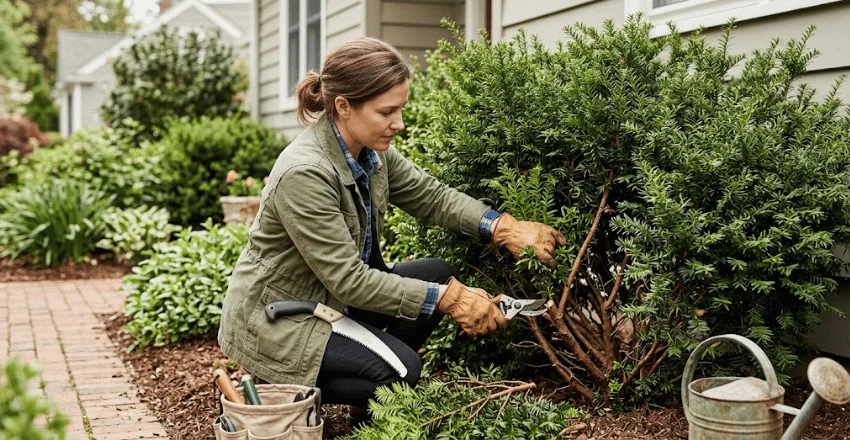
An overgrown shrub usually needs thinning before shaping. Remove some of the oldest stems near the base if the species tolerates renewal pruning. Spread major reduction across several seasons when you are unsure about hard pruning.
Do not assume every shrub can be cut close to the ground. Some plants regenerate strongly, while others may remain bare or die back. Old wood on many needle-leaved evergreens is especially slow or unable to produce new shoots.
A gradual three-year renewal plan often protects appearance and plant vigor. Remove a portion of the oldest stems each year, then reassess new growth. This method also prevents large empty spaces from appearing at once.
Common Bush-Trimming Mistakes
- Cutting before identifying the shrub.
- Pruning spring bloomers before they flower.
- Removing too much healthy growth in one session.
- Shearing every shrub into a ball or box.
- Leaving a formal hedge wider at the top.
- Cutting evergreen branches into bare old wood.
- Using dull or undersized tools.
- Ignoring active bird nests inside dense growth.
- Working near utility lines without professional help.
The most common mistake is chasing a perfect shape in one session. That approach often leads to deeper cuts after each correction. Small passes give you time to preserve foliage and symmetry.
Another mistake is using a hedge trimmer for every pruning task. Powered trimmers are efficient for long, formal surfaces. Hand tools provide better control for natural shrubs and interior thinning.
Aftercare and Cleanup
Remove clippings from the shrub so broken leaves do not hide your final shape. Collect diseased material separately from healthy debris when practical. Clean your tools before moving to another plant if disease is suspected.
Water according to the shrub’s normal needs after pruning. Do not compensate for heavy cutting with excessive fertilizer. Stable care is usually better than pushing a burst of soft new growth.
If you are refreshing the whole entry area, coordinate planting with nearby hardscape and access points. Dream of DIY’s porch gate ideas can help connect greenery with the front approach. Its outdoor deck gate guide covers another practical exterior upgrade.
When to Call a Professional
Professional help makes sense when a shrub is extremely large, damaged, or close to electrical service. It is also useful when valuable specimens need major rejuvenation. A certified arborist or experienced landscape professional can identify plants and choose safer reduction cuts.
Call for help if large branches exceed your tools or safe reach. Avoid ladders while operating powered hedge equipment. Safety matters more than finishing the job in one afternoon.
For broader exterior planning, Dream of DIY’s landscaping resources can help you organize projects around the yard. Plan pruning, gates, pathways, and other upgrades as separate jobs. That approach keeps each project easier to evaluate and maintain.
Frequently Asked Questions
What is the easiest way to learn how to trim bushes?
Start by identifying the shrub and removing dead or damaged growth. Then thin crowded stems before shortening healthy branches. Finish with light shaping and stop before the plant looks stripped.
Can I cut a bush back by half?
That depends on the species and the type of pruning. Many shrubs should not lose half their healthy growth during routine maintenance. Use gradual renewal unless reliable species guidance supports harder rejuvenation.
Should I use a hedge trimmer or hand pruners?
Use hedge trimmers mainly for formal hedges and long, even surfaces. Use hand pruners for selective cuts and natural-form shrubs. Loppers or saws handle branches that exceed hand-pruner capacity.
Why should a hedge be wider at the bottom?
A wider base allows more light to reach lower leaves and branches. That helps the hedge stay full near the ground. A top-heavy shape can shade lower growth and create bare areas.
Can I prune shrubs in the fall?
Light corrective work may be fine for some species, but heavy pruning can trigger tender regrowth. That new growth may be vulnerable to early freezes. Check species and local climate guidance before major fall pruning.
Keep the Next Trim Simple
Healthy shrub care is easier when you make small decisions in the right order. Identify the plant, remove problem wood, thin crowded growth, then shape what remains. Stop before the shrub loses too much foliage. Take a photo before and after your first careful session. The comparison makes future maintenance easier to judge. Regular light pruning is usually simpler than rescuing a badly overgrown shrub later.