Finding fleas on your pets or around your home can quickly become a frustrating problem. A professional flea exterminator can help control an established infestation when repeated cleaning and home treatments haven’t worked. For U.S. homeowners, hiring a qualified pest control company means getting a targeted treatment plan, clear safety instructions, and follow-up support. Professional treatment works best when you combine it with proper pet protection and household cleaning. Understanding what happens during service helps you prepare your home and avoid paying for unnecessary treatments.
Flea Extermination at a Glance
| What homeowners want to know | What to expect |
|---|---|
| When to hire a professional | Persistent fleas after 2–4 weeks of consistent DIY control |
| Typical initial treatment cost | Approximately $75–$400 |
| Common treatment methods | Adult flea insecticide and insect growth regulator (IGR) |
| Indoor treatment areas | Carpets, rugs, furniture, baseboards, and pet resting spots |
| Outdoor treatment | Shaded areas where pets rest or fleas develop |
| Follow-up timing | Often around two weeks after initial treatment |
| Pet protection | Veterinary-recommended flea prevention for every pet |
| Homeowner preparation | Vacuuming, laundering bedding, and clearing floors |
| Expected results | Gradual reduction as remaining pupae emerge and adults are controlled |
When Should You Hire a Flea Exterminator?
A few fleas don’t always require professional treatment. Early infestations may respond to consistent vacuuming, laundering, and veterinarian-approved pet prevention. But a persistent problem can become harder to control as fleas continue reproducing. Consider professional service when you experience these situations:
- DIY treatment hasn’t worked: You’ve consistently cleaned and treated the affected areas for 2–4 weeks, but fleas keep appearing.
- Multiple pets are affected: Several dogs or cats carry fleas, increasing the chances of repeated household exposure.
- People are getting bitten: Flea bites appear around ankles and lower legs, suggesting active fleas inside the home.
- Fleas appear in several rooms: You notice activity in bedrooms, living rooms, carpets, and furniture.
- The infestation keeps returning: Fleas disappear temporarily but reappear after cleaning or treatment.
- Your home has difficult-to-treat areas: Heavy carpeting, upholstered furniture, or inaccessible spaces make thorough treatment challenging.
Don’t wait for every room to become infested before requesting an inspection. A professional can identify likely breeding areas and recommend treatment based on the actual problem.
What Does a Professional Flea Treatment Include?
A qualified technician should inspect your home before recommending pesticides. The inspection helps identify where fleas are developing and which areas need attention. Treatment should address the indoor environment, outdoor conditions when necessary, and ongoing flea protection for pets.
1. Inspection and Identification
The technician checks carpets, rugs, upholstered furniture, pet bedding, and floor edges. They may pay particular attention to areas where pets sleep or spend considerable time. These locations often collect flea eggs and developing larvae. The inspection should also consider outdoor resting spots and possible wildlife activity. Shaded areas beneath decks, porches, shrubs, and pet shelters may support flea development. Treating the entire yard isn’t automatically necessary.
2. Indoor Treatment With Adulticide and IGR
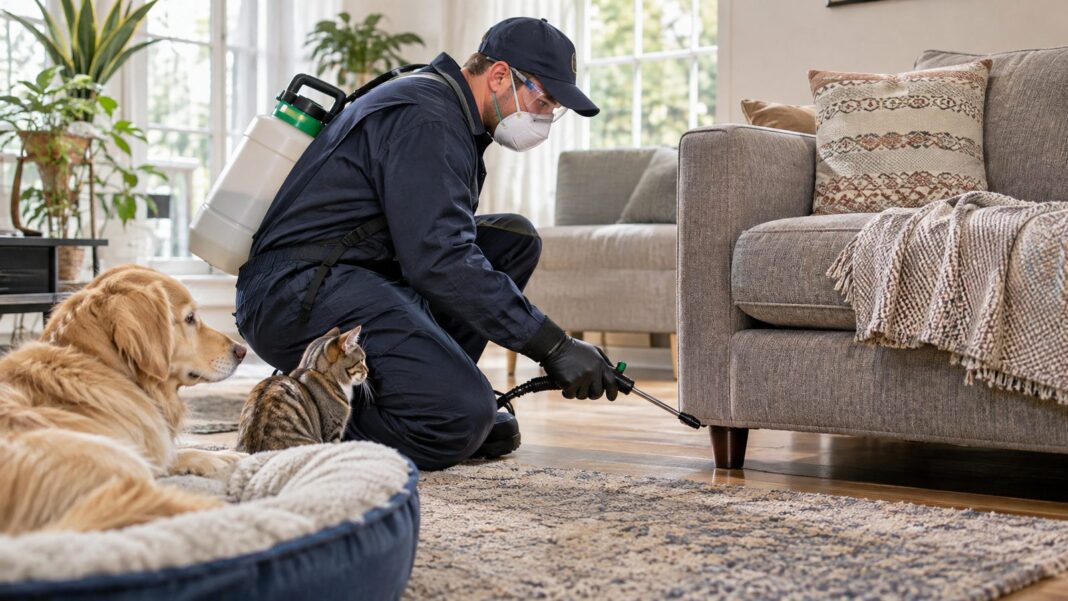
Professional flea treatments commonly combine two types of products. An adulticide targets existing adult fleas, while an insect growth regulator interferes with immature flea development. This combination addresses different stages of the infestation. Technicians typically concentrate applications on affected carpets, furniture, baseboards, and pet resting areas. Product selection depends on the infestation, surfaces, household conditions, and pesticide label directions. Ask which active ingredients the company plans to use.
3. Targeted Yard Treatment
Outdoor treatment may help when pets regularly rest in shaded areas. Technicians can inspect beneath decks, around kennels, and near protected vegetation. They may recommend treating specific locations rather than spraying the entire lawn. Removing excessive vegetation and limiting wildlife access can also help. These changes reduce sheltered locations where immature fleas may survive. Outdoor treatment should follow inspection findings rather than an automatic whole-yard application.
4. Follow-Up Inspection or Treatment
A second visit is often scheduled around two weeks after the initial application. This timing helps address fleas emerging from protected pupal cocoons. Pupae can resist many insecticide applications, allowing new adults to appear after treatment. The technician should explain whether another application is necessary. Follow-up requirements depend on the products, infestation severity, and observed flea activity. A good service agreement explains what the follow-up includes.
How Much Does Professional Flea Extermination Cost?
Professional flea extermination typically costs approximately $75–$400 for an initial visit in the United States. Angi’s 2026 cost guide reports this range, with a national average near $270. HomeGuide’s published estimates also place many one-time treatments around $200–$400. These figures are estimates, not guaranteed local prices. Your final quote depends on home size, infestation severity, treatment coverage, and additional visits.
| Service or treatment | Approximate cost |
|---|---|
| Initial professional treatment | $75–$400 |
| Common one-time treatment estimate | $200–$400 |
| Exterior or yard treatment add-on | $150–$300 |
| Additional follow-up visit | $75–$200 |
| Annual flea control plan | $300–$600 |
These approximate ranges reflect published Angi and HomeGuide cost guides. Actual prices vary by location and provider.
What Affects the Final Price?
Several factors can change your estimate considerably. A small infestation limited to one room generally requires less work than a widespread problem. Consider these common cost factors:
- Home size: Larger properties require more inspection and treatment coverage.
- Infestation severity: Established infestations may need additional visits.
- Treatment areas: Furniture, multiple bedrooms, and outdoor spaces can increase labor.
- Treatment products: Different formulations and application methods affect pricing.
- Follow-up services: Additional inspections or applications may increase the total.
- Location: Local labor rates and regional pest control demand affect estimates.
Ask whether the quoted amount includes inspection, indoor treatment, yard treatment, and follow-up. Comparing the complete service package is more useful than choosing the lowest initial price.
How to Prepare Your Home Before Treatment
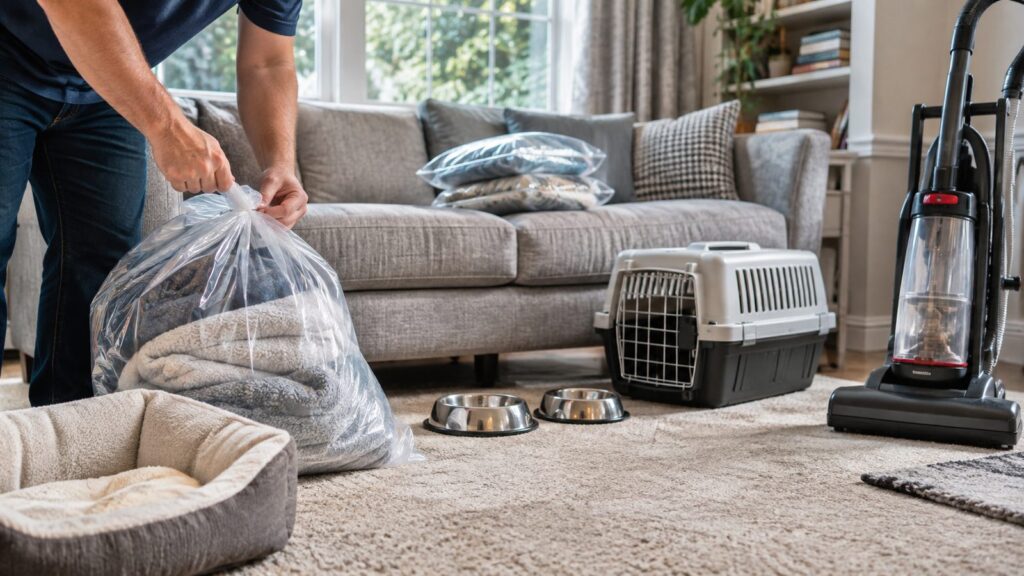
Proper preparation helps technicians reach flea hiding places. It also reduces debris and flea eggs that can interfere with effective treatment. Follow the company’s specific preparation instructions before the appointment. For carpet care between treatments, see our carpet stain remover guide.
Pre-Treatment Checklist
- Vacuum all floors: Clean carpets, rugs, hard floors, and areas beneath furniture.
- Vacuum upholstered furniture: Remove cushions and clean seams, crevices, and underneath seating.
- Wash pet bedding: Use hot water when the fabric and care instructions allow.
- Clear floors: Move toys, clothing, shoes, and other loose belongings away from treatment areas.
- Remove pets and people: Follow the pesticide label and technician’s instructions for evacuation and reentry.
- Cover fish tanks: Follow the product label and technician’s directions to protect aquarium inhabitants and equipment.
- Store food and utensils: Put away exposed food, dishes, and kitchen items as directed.
- Discuss special household needs: Tell the technician about children, pets, aquariums, and sensitive household members.
Don’t assume every pesticide has the same drying or reentry time. Ask your technician exactly how long people and animals must stay outside. The product label determines the required precautions.
What Should You Do After Flea Treatment?
Professional treatment doesn’t always eliminate every visible flea immediately. Protected pupae can survive the application and emerge later. Continued cleaning helps remove developing fleas and encourages remaining adults to emerge. Follow these after-treatment practices:
- Vacuum daily: Concentrate on carpets, rugs, furniture, and pet resting areas.
- Empty the vacuum: Dispose of collected debris according to the technician’s instructions.
- Avoid mopping too soon: Follow the technician’s instructions about when floors can be cleaned.
- Keep monitoring: Watch pets and household areas for continuing flea activity.
- Attend the follow-up: Allow the technician to assess whether additional treatment is needed.
- Maintain pet prevention: Continue veterinary-approved protection on the recommended schedule.
Vacuuming creates vibrations that can stimulate adult fleas to emerge from their cocoons. It also removes eggs, larvae, and adult fleas from household surfaces. The University of Minnesota Extension recommends frequent vacuuming as part of household flea control. Don’t apply additional pesticides without professional guidance. Combining products or repeating applications too soon can create unnecessary exposure. Ask your technician before changing the treatment plan. Once the technician says floors can be cleaned, our dust mop guide explains how to choose and care for a mop.
Treat Every Pet at the Same Time
Treating every household pet is essential for lasting flea control. Environmental treatment alone cannot prevent untreated animals from bringing new fleas indoors. Dogs and cats need an appropriate preventive selected with veterinary guidance. Ask your veterinarian which flea preventive suits each animal. The recommendation may depend on species, age, weight, health, and other medications. Follow the product instructions and maintain the prescribed schedule. Never use a dog flea product on a cat. Some dog treatments contain permethrin, which is toxic to cats. Cats can also face exposure through contact with recently treated dogs. In its safe-use update for flea and tick products, the U.S. Food and Drug Administration states plainly: “If the product is for use on dogs, don’t use it on cats.” Keep pets separated as directed by the product label and your veterinarian. Seek veterinary advice immediately if you suspect accidental exposure.
How to Choose a Reliable Flea Control Company
Choosing the right company matters as much as selecting the treatment itself. Look for a qualified provider who explains the process and gives you clear expectations. Avoid companies that promise instant, permanent results without inspecting your home. If you suspect other pests too, our flying termites guide explains what to do. Use these questions when comparing providers:
| What to check | What to ask |
|---|---|
| State licensing | Is the company properly licensed by the state pesticide regulatory agency? |
| Inspection | Will a technician inspect the home before treatment? |
| Treatment method | Which products and active ingredients will you use? |
| Pet safety | What precautions should pet owners follow? |
| Written estimate | Does the quote list every included service? |
| Follow-up | Is a second visit included or charged separately? |
| Guarantee | What does the service guarantee cover? |
| Insurance | Does the company carry appropriate business insurance? |
Understand the Guarantee Before Signing
Some providers offer limited service guarantees or retreatment policies. These agreements can differ significantly between companies. Read the terms before paying or signing a service contract. Ask how long the guarantee lasts and which conditions could void it. Check whether follow-up visits are included or require another payment. Confirm whether the company expects you to maintain pet prevention and household cleaning. A written estimate should identify the treatment areas, products, expected timeline, and total price. It should also explain what happens if fleas remain after the scheduled service. Clear documentation helps prevent misunderstandings.
Understanding the Flea Life Cycle
Understanding flea development explains why one treatment may not solve everything. Fleas pass through four stages: egg, larva, pupa, and adult. Each stage responds differently to environmental conditions and control methods.
| Life stage | What happens |
|---|---|
| Egg | Adult females lay eggs that fall from pets into carpets and bedding. |
| Larva | Small larvae develop in protected areas and feed on organic debris. |
| Pupa | Larvae form protective cocoons where developing fleas can remain hidden. |
| Adult | Mature fleas emerge, find a host, feed, and reproduce. |
Eggs commonly hatch within several days under suitable conditions. Larvae then develop before forming protective cocoons. Pupae may remain dormant for weeks or months when conditions aren’t favorable. Walking, warmth, and vibrations can stimulate adult fleas to emerge. This explains why homeowners may continue seeing fleas after professional treatment. The University of Minnesota Extension provides further details about flea development and environmental control.
Frequently Asked Questions
How long does it take a flea exterminator to get rid of fleas?
Initial treatment can reduce active flea populations quickly. Complete control often takes longer because protected pupae may survive the first application. Continue vacuuming and follow the recommended follow-up schedule.
Should I leave my house during flea treatment?
Usually, people and pets must leave treated areas during application and for the required reentry period. The exact timing depends on the pesticide label and application method. Ask your technician for written instructions before the appointment.
Is one professional flea treatment enough?
One treatment may control many adult fleas and developing larvae. But pupae can remain protected inside their cocoons. Some infestations therefore require follow-up inspection or additional treatment.
Can fleas return after professional extermination?
Yes, fleas can return if pets remain untreated or new fleas enter from outdoor areas. Wildlife activity can also introduce fleas into the yard. Consistent pet prevention and household cleaning reduce the risk of another infestation.
When should I call a flea exterminator?
Consider professional help when fleas persist after 2–4 weeks of consistent DIY control. Multiple affected pets, repeated human bites, and activity across several rooms also justify an inspection. Earlier assessment may prevent a small problem from becoming widespread.
Do flea exterminators treat pets?
Professional pest control technicians generally treat the household environment, not the animals themselves. Your veterinarian should recommend and manage flea prevention for each pet. Both steps must work together for lasting control.
Final Thoughts: Get a Professional Flea Inspection Before the Problem Spreads
Persistent fleas can be difficult to control without a coordinated treatment plan. A qualified professional can identify infested areas, apply appropriate products, and arrange follow-up when necessary. But lasting results also depend on treating every pet and maintaining household cleaning. Before hiring, compare written estimates from licensed companies. Confirm the treatment areas, product precautions, follow-up schedule, and guarantee terms. These details help you choose a service that fits your home and budget. Your next step: Contact two or three licensed pest control companies and request written flea treatment estimates. Ask each provider how they coordinate indoor treatment, outdoor inspection, follow-up, and pet safety. —
Editorial note: This article is a general U.S. homeowner guide. Pesticide use must follow the registered product label and applicable state requirements. Veterinary flea prevention should be selected with a qualified veterinarian. —