
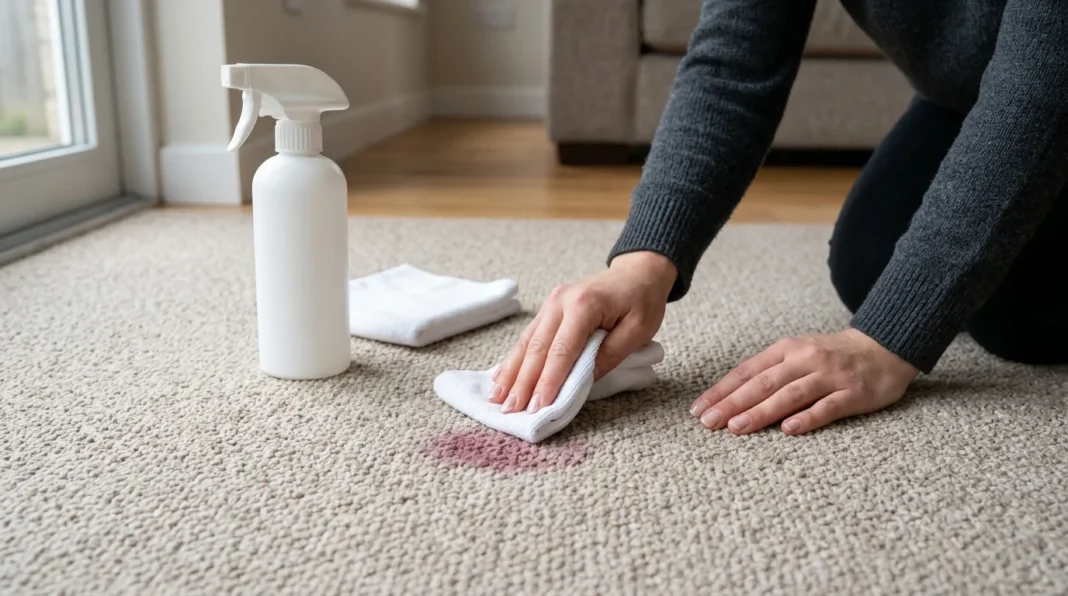
A good carpet stain remover should lift the spill without harming the carpet beneath it. The safest choice depends on the stain, fiber, and product instructions. Start by blotting, testing a hidden area, and using the mildest suitable treatment first.
Quick answer: Blot fresh spills immediately with a clean white cloth, working from the outside toward the center. Match the cleaner to the stain instead of scrubbing harder. Test every solution in a hidden spot, rinse away residue when required, and avoid soaking the carpet backing.
Carpet Stain Removal at a Glance
| Stain or situation | Good starting approach | Key caution |
|---|---|---|
| Coffee or tea | Blot, then use a compatible spot cleaner | Avoid aggressive rubbing |
| Red wine | Blot quickly, then use a tannin-safe treatment | Test colorfastness first |
| Pet urine | Use an enzyme-based product labeled for carpet | Follow label contact time |
| Grease or oil | Use a carpet-approved solvent treatment | Never pour solvent directly on carpet |
| Mud | Let heavy mud dry, vacuum, then treat residue | Wet mud can spread |
| Old stains | Rehydrate only when product directions allow | Repeat gently rather than scrubbing |
| Unknown stain | Start with water and manufacturer guidance | Avoid mixing chemicals |
Independent testing also shows why one cleaner rarely wins every situation. Consumer Reports tested eight products plus a DIY solution and took 270 colorimeter readings. Different formulas performed differently across common household stains.
How to Choose a Carpet Stain Remover
Start with the stain type rather than the strongest-looking bottle. Food dyes, grease, pet waste, mud, and coffee respond differently to cleaning formulas. A targeted product usually makes more sense than repeated applications of an unsuitable cleaner.
Next, check your carpet fiber and warranty instructions. Wool and some specialty fibers can require gentler products than common synthetic carpeting. Manufacturer directions should take priority when they conflict with general household advice.
Look for clear instructions covering dwell time, rinsing, ventilation, and surface compatibility. U.S. shoppers can also search EPA’s Safer Choice program for qualifying carpet-cleaning products. The program identifies products meeting EPA criteria for safer chemical ingredients.
For more surface-care ideas, browse Dream of DIY’s Cleaning section. Its guides focus on choosing methods that suit the material being cleaned. That same principle matters greatly with carpet fibers.
7 Steps for Removing a Carpet Stain Safely
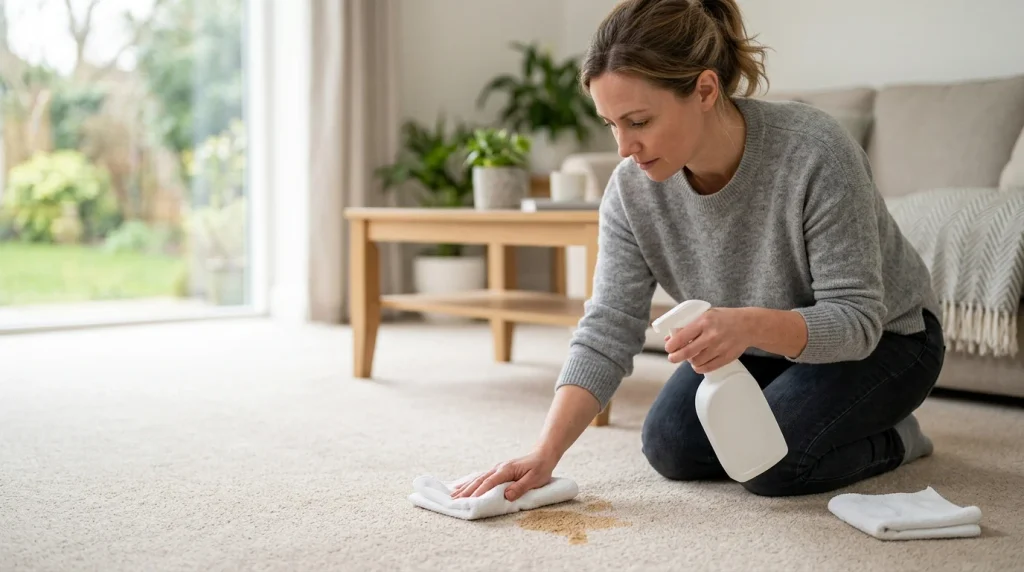
- Remove solids first. Lift food, dirt, or debris without pushing it deeper. Use a spoon or dull edge when needed.
- Blot excess liquid. Press a clean white cloth onto the spill. Work from the outside inward to limit spreading.
- Identify the stain. Determine whether you are handling food, grease, pet waste, mud, or another material. This helps you choose the correct treatment.
- Test the cleaner. Apply a small amount in an inconspicuous area. Check for color change, texture damage, or unwanted residue.
- Treat without scrubbing. Apply the product according to its label. Blot gently instead of grinding the stain into the fibers.
- Rinse when directed. Remove cleaning residue with small amounts of clean water. Excess detergent can attract new soil after drying.
- Dry the area completely. Blot remaining moisture and allow good airflow. Repeat the approved treatment if discoloration remains.
Shaw Floors specifically recommends blotting spills rather than rubbing or abrasive scrubbing. Its stain procedures also advise working from the outside inward. Those habits help protect fibers while containing the affected area.
The same idea applies around the house: matching tools to surfaces matters. Hard floors and carpets require different maintenance methods, and surface-specific care reduces unnecessary wear.
What Works for Common Carpet Stains?
Coffee and Tea
Blot coffee or tea while the spill remains fresh. Use clean cloths until little additional liquid transfers from the carpet. Then apply a compatible spot treatment according to its directions.
Avoid flooding the spot with cleaner or water. Too much moisture can carry dissolved material deeper into the carpet. Several light treatments are often easier to control than one saturated application.
Commercial spot removers vary widely in performance on coffee. Recent independent testing found meaningful differences between products on common household stains. Product choice matters, but technique still matters too.
Red Wine
Begin by absorbing as much wine as possible without rubbing. Continue using clean sections of your cloth as color transfers. Treat the remaining discoloration with a product approved for your carpet.
Some stain removers are formulated specifically for tannin-based spills such as wine. Still, label directions and carpet compatibility should guide your choice. A hidden-area test reduces the risk of creating a lighter patch.
Avoid assuming every popular household mixture is harmless. Vinegar, peroxide, detergent, and other ingredients behave differently across carpet materials. Manufacturer guidance remains the safer starting point.
Pet Urine and Other Organic Messes
Pet accidents create both discoloration and odor problems. Enzyme-based cleaners are commonly designed for organic pet residues. Use only products labeled for your carpet and follow their required contact time.
Do not add another chemical mixture while the first product remains in the carpet. Combining household cleaners can create unwanted reactions or damage. Finish one approved process before considering another treatment.
EPA also advises reading household-product labels before use around pets. Keep animals and children away from treated areas as directed. Store cleaning products in their original containers after use.
Grease and Oil
Greasy stains need a different approach from water-based spills. Shaw’s carpet-care instructions recommend suitable spot-removal solvents for grease, oil, and tar. They specifically warn against pouring those solvents directly onto carpet.
Instead, the manufacturer directs users to apply solvent to a cloth first. Blot the affected area, then follow with an appropriate detergent process. Rinsing detergent residue also helps reduce rapid resoiling.
Material-specific cleaning matters on other surfaces too. Dream of DIY’s granite stain remover guide explains why stain treatments must suit the surface. The same logic applies to textile flooring.
Mud and Tracked-In Dirt
Heavy mud is often easier to handle after the solid material dries. Vacuum the dry soil first instead of spreading wet dirt through nearby fibers. Treat any remaining mark after removing loose particles.
Routine vacuuming can also reduce soil before it becomes deeply embedded. Shaw identifies frequent vacuuming as a core part of carpet maintenance. Removing grit early can reduce future cleaning work.
For hard surfaces beside carpeted rooms, Dream of DIY’s stainless-steel cleaning guide offers another useful cleaning principle. Start gently before moving to stronger treatment. That approach helps limit accidental surface damage.
DIY Cleaner or Commercial Product?
A DIY mixture can be inexpensive and convenient for certain uncomplicated spills. Yet a homemade solution is not automatically safer for every carpet. Fiber type, backing materials, dyes, and stain chemistry can change the result.
Commercial products provide labeled directions and defined surface recommendations. Some formulas target pet waste, grease, tannins, or general food stains. That makes product selection easier when you know what caused the mark.
Current tests also suggest that homemade and commercial options can perform differently by stain. Consumer Reports compared a DIY vinegar-and-dish-soap mixture with commercial removers during its 2026 testing. No single approach should be assumed to handle every spill equally.
Mistakes That Can Make a Stain Worse
Scrubbing is one of the easiest mistakes to make during a stressful spill. Aggressive rubbing can spread contamination and roughen carpet fibers. Blotting applies less mechanical stress while absorbing the mess.
Overusing cleaner can also create problems. Residue left within the pile may attract fresh dirt after the area dries. Shaw therefore includes a clean-water rinse in several stain-treatment procedures.
Avoid soaking a small spot until the backing becomes wet. More liquid does not automatically produce more cleaning power. Controlled applications are easier to rinse, blot, and dry.
Never mix cleaning chemicals unless a product manufacturer specifically directs you to do so. Follow ventilation, glove, and safety instructions printed on the label. EPA advises consumers to read those directions before using household cleaning products around pets.
When Should You Call a Professional?
Professional help makes sense when a large spill reaches the carpet backing or padding. It can also help with recurring odors, widespread staining, or delicate fibers. Large wet areas deserve faster attention because complete drying becomes harder.
Consider professional cleaning when repeated approved spot treatments stop improving the stain. Continuing to scrub or add stronger products can create permanent texture or color changes. Shaw also advises contacting a cleaning professional when its recommended stain process does not remove the mark.
Keep your carpet’s warranty and care instructions available before booking service. Some manufacturers specify approved cleaning methods or intervals. Following those requirements can protect both the flooring and warranty coverage.
Frequently Asked Questions
What is the best carpet stain remover for most household spills?
There is no universal winner for every stain and carpet type. Choose a formula compatible with your flooring and designed for the specific spill. Independent testing confirms that performance can change significantly between stains.
Should you blot or scrub a carpet stain?
Blot the area rather than scrubbing it. Carpet manufacturers warn that abrasive rubbing can fray or distort fibers. Work inward from the edges to reduce spreading.
Can old carpet stains still come out?
Some older stains can improve with repeated, appropriate treatment. The outcome depends on the stain, carpet, previous cleaning attempts, and time. Follow the product’s directions before rewetting or repeating treatment.
Is vinegar safe for every carpet?
No household ingredient should be assumed safe for every carpet. Fibers, backing, dyes, and manufacturer requirements can differ. Test any approved treatment in a hidden area before using it prominently.
How do you prevent a cleaned spot from becoming dirty again?
Remove cleaner residue whenever the product directions require rinsing. Blot away moisture and let the carpet dry completely. Residual detergent can contribute to faster resoiling in the treated area.
Keep Spot Cleaning Simple
The safest stain routine starts with speed, restraint, and the correct treatment. Blot first, identify the mess, check the carpet instructions, and test your cleaner. Stronger scrubbing should never replace the right cleaning method.
Keep clean white cloths and a compatible spot product where you can reach them quickly. Review Dream of DIY’s other cleaning guides when you need surface-specific care around the house. A small amount of preparation makes the next spill easier to manage.