
A reliable backup generator can keep essential systems running when utility power fails. Home generator installation requires more planning than choosing a generator and placing it beside your house. You need proper sizing, safe placement, permits, electrical protection, fuel planning, and qualified installation.
Quick answer: A safe installation starts with calculating your required electrical load and choosing a suitable generator. A qualified installer then plans the location, transfer equipment, fuel connection, permits, and electrical work. Permanent standby systems should meet manufacturer instructions and all applicable local codes before operation.
Home Generator Installation at a Glance
| Project factor | What U.S. homeowners should expect |
|---|---|
| Typical system | Permanently installed standby generator |
| Common fuel choices | Natural gas or propane |
| Electrical connection | Transfer equipment isolates generator and utility power |
| Site planning | Manufacturer clearances, ventilation, access, drainage, and local rules |
| Permits | Requirements vary by state and local jurisdiction |
| Professional help | Electrician plus qualified fuel-system work when applicable |
| 2026 cost reference | Many whole-house projects fall between about $1,512 and $8,803 |
| Final inspection | May include electrical, fuel, building, or zoning review |
The national cost figures above provide budgeting context, not a project quote. Angi reports a 2026 average near $5,157 for whole-house projects. Equipment capacity, fuel work, panel changes, site preparation, and local labor can change that figure substantially.
Key Takeaways
- Size the generator based on actual electrical loads, not home square footage alone.
- Never allow generator power to backfeed onto utility lines.
- Permanent standby systems need approved transfer equipment and code-compliant connections.
- Placement rules depend on the listed generator, local regulations, and site conditions.
- Portable-generator safety rules do not automatically define standby-generator clearances.
- Permits and inspections can affect both project cost and completion time.
- Get a written proposal showing equipment, labor, permits, site work, and exclusions.
How Home Generator Installation Works in 7 Safe Steps
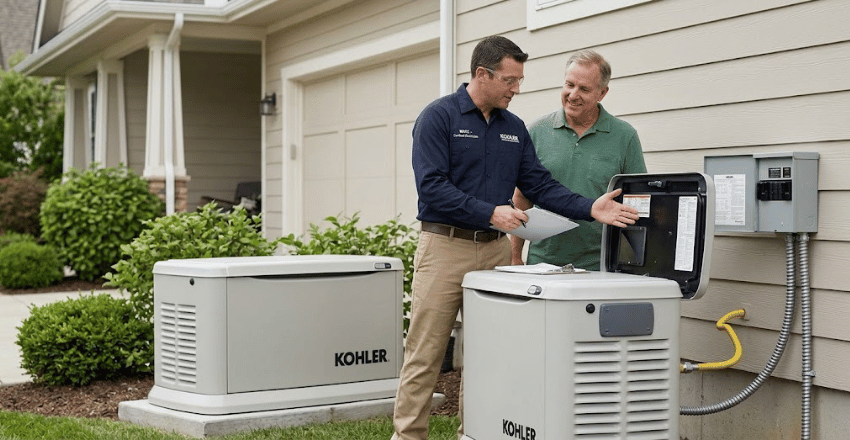
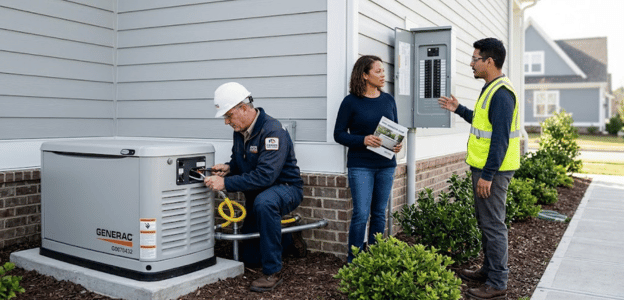
A permanent standby system combines electrical equipment, an outdoor engine, transfer equipment, and a dependable fuel source. These components must operate together without exposing occupants or utility workers to preventable hazards. The safest homeowner role is planning, comparing proposals, and confirming qualified professional work.
1. Decide which loads need backup power
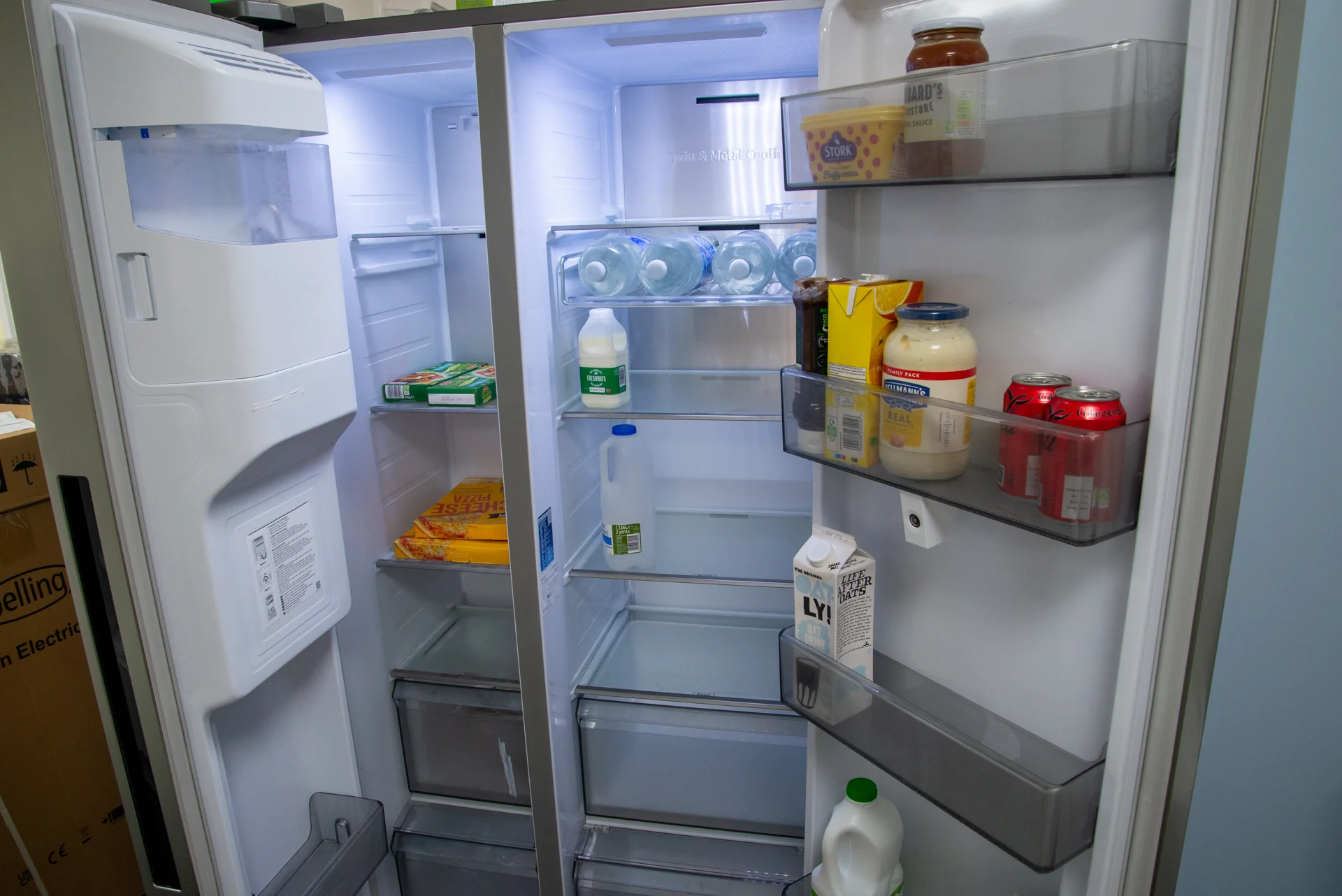
Start by deciding what must continue working during an outage. Essential loads might include refrigeration, heating equipment, well pumps, lighting, communications, and selected outlets. Central air conditioning and large electric appliances can quickly increase required capacity.
Avoid choosing capacity from home size alone. An electrician can review appliance ratings, starting loads, and simultaneous demand before recommending equipment. Dream of DIY’s refrigerator reliability guide can also help when planning protection for essential kitchen equipment.
2. Choose between essential-load and whole-house coverage
An essential-load design supplies selected circuits instead of every electrical load. This approach can reduce generator capacity and project cost when your outage needs are modest. A whole-house design offers broader coverage but may require larger equipment or load-management controls.
Think about your climate before choosing either approach. Homes dependent on electric cooling or heating may need considerably more available power. Dream of DIY’s HVAC performance guide explains several factors that affect heating and cooling system demand.
3. Select a safe installation location
Standby-generator placement should follow the exact manufacturer’s installation instructions and applicable local rules. Required separation can depend on openings, combustible surfaces, equipment design, property lines, and nearby structures. Your installer should confirm these constraints before ordering or setting equipment.
Do not confuse standby placement with portable-generator guidance. CPSC recommends operating portable units outdoors and at least 20 feet from homes. Also, direct exhaust away from doors, windows, vents, and nearby buildings.
4. Confirm the fuel supply
Natural gas can provide convenient continuous fuel where utility service has adequate capacity. Propane can work where natural gas is unavailable, but tank sizing becomes part of outage planning. Either option may require changes beyond the generator itself.
Your contractor should verify required fuel pressure and capacity for the chosen model. Existing piping may not support the added demand without modification. Local rules can also require permits or inspection for new fuel work.
5. Plan transfer equipment and electrical work
Transfer equipment prevents utility and generator electricity from energizing the home at the same time. This isolation protects equipment and reduces dangerous backfeed onto utility wiring. ESFI states that transfer switches should be installed by a qualified electrician.
This work goes beyond a basic household electrical repair. Dream of DIY’s light-switch guide explains why homeowners should stop when electrical work exceeds a simple replacement. A standby connection belongs firmly in professional territory.
6. Secure permits and complete installation
Permit requirements vary widely across the United States. A project can involve electrical, building, fuel, mechanical, zoning, or other approvals. Ask your contractor exactly which permits are included before signing an agreement.
The physical installation may move quickly once planning and approvals are complete. Home Depot says full-service standby installation can often be completed in one day. Site preparation, utility coordination, permits, and inspections can extend the broader project schedule.
7. Test the system and document the handoff
Test the completed system under the installer’s or manufacturer’s required commissioning process. Before the crew leaves, you should understand shutdown procedures, warning indicators, maintenance requirements, and transfer operation. Keep manuals, permits, warranty documents, and service information together.
Ask how often the unit performs its automatic exercise cycle. Confirm who handles scheduled maintenance and warranty service in your area. Clear service arrangements matter because backup equipment may sit unused between outages.
What Does a Home Standby Generator Cost in 2026?
National cost data gives you a useful starting point, but local quotes matter more. Angi reports most whole-house projects between $1,512 and $8,803 in 2026. Its reported national average is approximately $5,157.
Large systems or complicated properties can cost substantially more. Long fuel runs, panel upgrades, concrete work, trenching, and difficult access can increase labor. Permit fees and local contractor rates can also move the total.
| Cost factor | Why it changes the price |
|---|---|
| Generator capacity | Larger equipment generally costs more |
| Transfer equipment | Service size and design affect equipment needs |
| Fuel work | New piping, regulators, or propane storage add scope |
| Electrical upgrades | Older panels may require additional work |
| Site preparation | Pads, grading, protection, or trenching add labor |
| Permits | Local requirements and fees differ |
| Distance from utilities | Longer electrical or fuel runs use more materials |
| Load management | Controls may reduce required generator capacity |
Ask each bidder to separate equipment and installation costs whenever possible. You should also identify allowances that could change after work begins. Comparing detailed proposals is more useful than comparing one final number.
What You’ll Need Before Requesting Quotes
Good information helps contractors size and price the project accurately. Gather recent utility information, electrical-panel details, appliance information, and your desired backup loads. Take photographs of the panel, gas meter, proposed outdoor area, and nearby building openings.
Also decide how much outage convenience you want. Keeping refrigeration and several circuits operating costs less than supporting every major appliance. That decision can save you from paying for capacity you rarely need.
Portable Generator Versus Standby Generator
Portable and standby units solve similar problems through different systems. A portable generator is temporary equipment that needs careful outdoor operation during each outage. A standby unit stays installed outside and can start automatically when configured to do so.
| Feature | Portable generator | Standby generator |
|---|---|---|
| Installation | Limited permanent work unless connected to household wiring | Permanently installed |
| Starting | Usually manual | Commonly automatic |
| Fuel | Often gasoline or propane | Commonly natural gas or propane |
| Household connection | Requires approved transfer equipment for home wiring | Uses permanent transfer equipment |
| Placement | CPSC recommends at least 20 feet from the home | Follow listed manufacturer clearances and local rules |
| Typical use | Temporary selected loads | Longer-term automatic backup |
Never operate a portable generator in a garage, basement, shed, crawlspace, porch, or other enclosed area. Open doors do not make an enclosed location safe. CPSC warns that portable generators can produce lethal levels of carbon monoxide.
Generator Installation Mistakes to Avoid
The first mistake is buying equipment before completing a load assessment and site review. A larger generator is not automatically the better choice. Correct sizing depends on the loads you expect to run during an outage.
Another mistake is accepting an unclear proposal. The contract should identify the generator, transfer equipment, fuel work, site preparation, permits, startup, and warranty responsibilities. Written exclusions also help prevent surprises after work begins.
A third mistake is treating generator connections as ordinary DIY wiring. Improper connections can create shock, fire, equipment, and backfeed hazards. NFPA recommends qualified electrical installation when a generator supplies household wiring through transfer equipment.
How to Compare Generator Installation Quotes
Request proposals that cover the same backup goals. One contractor might quote whole-house capacity while another designs around selected essential loads. Those proposals cannot be compared fairly until their scopes match.
Check the generator model, rated output, transfer equipment, fuel work, and included site preparation. Confirm who is responsible for permits, inspections, startup, cleanup, warranty service, and future maintenance. Ask how unexpected panel or fuel-system work would be priced.
Price should not be your only deciding factor. Look for applicable licensing, insurance, manufacturer familiarity, and clearly documented responsibilities. A precise proposal usually gives you better information to make a decision than a vague low bid.
Frequently Asked Questions
How long does home generator installation take?
The on-site equipment work may finish within a day for a straightforward project. Site preparation, permitting, fuel work, inspections, and scheduling can extend the overall process. Ask your contractor for an installation date and the expected project completion timeline.
Do I need a permit for a standby generator?
Many U.S. jurisdictions require permits for permanently installed standby equipment. Requirements can differ by city, county, state, electrical work, and fuel type. Your local building department or qualified installer can confirm the exact approvals.
Can I install a whole-house generator myself?
Permanent systems involve household electrical service and often involve combustible fuel. Improper connections, clearances, or transfer equipment can create serious hazards. Licensed professionals should perform work where local rules or required expertise demand it.
Why does a generator need a transfer switch?
Transfer equipment isolates the generator source from normal utility power. That isolation prevents dangerous backfeed and controls which source supplies the home’s electrical system. ESFI specifically warns against operating household-connected generators without proper transfer equipment.
How large should my generator be?
Generator size depends on the loads you want available during an outage. Motors and compressors may need extra starting power beyond their normal running demand. A proper load assessment yields better results than choosing capacity based on square footage alone.
How far should a generator be from my house?
Portable generators should operate at least 20 feet from the house under current CPSC guidance. Permanently installed standby equipment follows its listed manufacturer clearances and applicable local rules. Never apply a generic distance when the specific equipment requires different placement conditions.
Your Next Step
Start by listing the systems you cannot lose during an extended outage. Then request comparable proposals from qualified local installers using that same backup-load list. This approach makes it easier to evaluate equipment recommendations, project scopes, and prices.
Review placement and permit requirements before buying equipment yourself. Confirm that the proposal includes safe transfer equipment, commissioning, inspections, and clear warranty responsibility. Careful planning now can prevent expensive changes after the generator arrives.