

Introduction
Birkenstocks are known for their comfort and durability, but like any well-loved footwear, they require proper care to maintain their quality. The footbed can accumulate dirt, sweat, and oils over time, leading to discoloration and odor. Here’s a detailed guide on how to clean birkenstock footbed to keep them looking and feeling fresh.
| Aspect | Description |
| Material | They are typically made of cork and latex, providing natural cushioning and support. |
| Anatomy | Consists of a contoured shape with pronounced arch support, a deep heel cup, and a roomy toe box. |
| Footbed Features | It is designed to mold to the shape of the wearer’s foot over time, creating a custom fit and enhancing comfort. |
| Maintenance | Regular cleaning with a soft brush to remove dirt and occasional spot cleaning with mild soap and water are recommended. Avoid soaking to preserve integrity. |
| Longevity | With proper care, Birkenstock footbeds can last several years, maintaining their supportive qualities. |
| Customization | Some models allow for footbed replacement to accommodate individual preferences or extend the life of the sandals. |
| Versatility | Suitable for various activities from casual walking to light hiking, offering stability and comfort across different terrains. |
| Style Options | Available in various styles, colors, and materials, catering to different fashion preferences while maintaining ergonomic design principles. |
| Sustainability | Birkenstock emphasizes sustainable practices, using renewable materials like cork and minimizing environmental impact in production. |
Understanding Birkenstock Footbeds
Birkenstock footbeds are not your average insole. Crafted from natural cork, they mold to the shape of your feet over time, offering customized support. The footbeds also feature a suede lining known as suede or nubuck leather, adding to the sandals’ comfort and aesthetic appeal. It’s essential to clean and maintain the cork and suede components to keep your Birkenstocks in top condition.
How To Clean Birkenstock Footbed?
To clean Birkenstock footbeds, it’s crucial to be gentle. Start by brushing off dirt or debris with a soft brush or cloth. For deeper cleaning, use a mild soap or Birkenstock-approved cleaner mixed with water. Gently scrub the footbeds with a soft brush or cloth, focusing on stained areas. Avoid using harsh chemicals or submerging the footbeds in water. After cleaning, wipe off excess moisture with a dry cloth and allow the sandals to air dry away from direct sunlight or heat sources. Once dry, gently brush the suede or nubuck leather to restore its texture. Remember, regular cleaning is not just about maintaining the appearance of your Birkenstocks but also about preserving their integrity and comfort.
How to Properly Clean and Refresh a Birkenstock Footbed
Maintaining a clean footbed is essential for keeping Birkenstock sandals comfortable, fresh-smelling, and long-lasting. Start by gently brushing away loose dirt or dust with a soft brush or cloth. Then dampen a sponge or cloth with mild soapy water (or a gentle cleaners specifically designed for cork and suede footbeds) and scrub the footbed using small circular motions to lift stubborn grime. Once cleaned, wipe off any soap residue with a damp cloth, then allow the sandals to air-dry completely — never expose them to direct heat or sunlight as that can dry out the cork and damage the materials. Finally, resealing exposed cork edges with a cork sealant helps keep moisture out and preserves integrity, which extends the life of the sandals.
How long will this take to clean?
The time spent cleaning Birkenstocks varies. A quick once-over with a wet cloth, cork sealer, and leather protector can take fifteen minutes or longer, plus drying time. I’ve divided up the intervals for thoroughly cleaning each component of your shoe here. I spent roughly 45 minutes cleaning the typical dirty pairs.
Materials Needed
- Soft-bristled brush (e.g., toothbrush or suede brush)
- Mild dish soap or specialized leather cleaner
- Baking soda
- Water
- Cloth or sponge
- Towel
- Cork sealant (optional for cork footbeds)
Step-by-Step Cleaning Process
1. Pre-Cleaning Preparation
Before you begin the cleaning process, it is essential to remove any loose dirt or debris from the footbed. Use a soft-bristled brush to scrub the surface gently. This will help remove any surface-level dirt and make the deep cleaning process more effective.
2. Mixing the Cleaning Solution
In a small bowl, combine some warm water and a few drops of dish soap or leather cleaner. Ensure the solution is not too soapy, as excess soap can be complex to rinse out and may leave residue on the footbed.
3. Cleaning the Footbed
After dipping the cloth or sponge into the solution of soapy water, squeeze out any extra liquid. Gently scrub the footbed in circular motions, paying extra attention to any stained or discolored areas. Avoid soaking the footbed, as excessive moisture can damage the materials. You can use a soft-bristled brush to apply the cleaning solution more directly for stubborn stains. Be gentle to avoid damaging the footbed’s surface.
4. Rinsing the Footbed
Once you’ve scrubbed the footbed, use a clean, damp cloth to wipe away any soap residue. Removing all the soap is crucial to prevent any buildup that could attract more dirt.
5. Dealing with Odor
If your Birkenstock footbeds have developed an odor, baking soda can be an effective remedy. Sprinkle a generous amount over the entire footbed and let it sit overnight. In the morning, use a soft brush to remove the baking soda.
6. Drying the Footbed
After cleaning, you must let your Birkenstocks dry completely before wearing them again. Please place them in a well-ventilated area away from direct sunlight or heat sources, as excessive heat can cause the materials to warp or crack.
7. Applying Cork Sealant
If your Birkenstocks have a cork footbed, applying a cork sealant can help protect the cork and prolong the life of your shoes. Cork sealant prevents the cork from drying out and cracking.
Anatomy of Birkenstock Footbeds
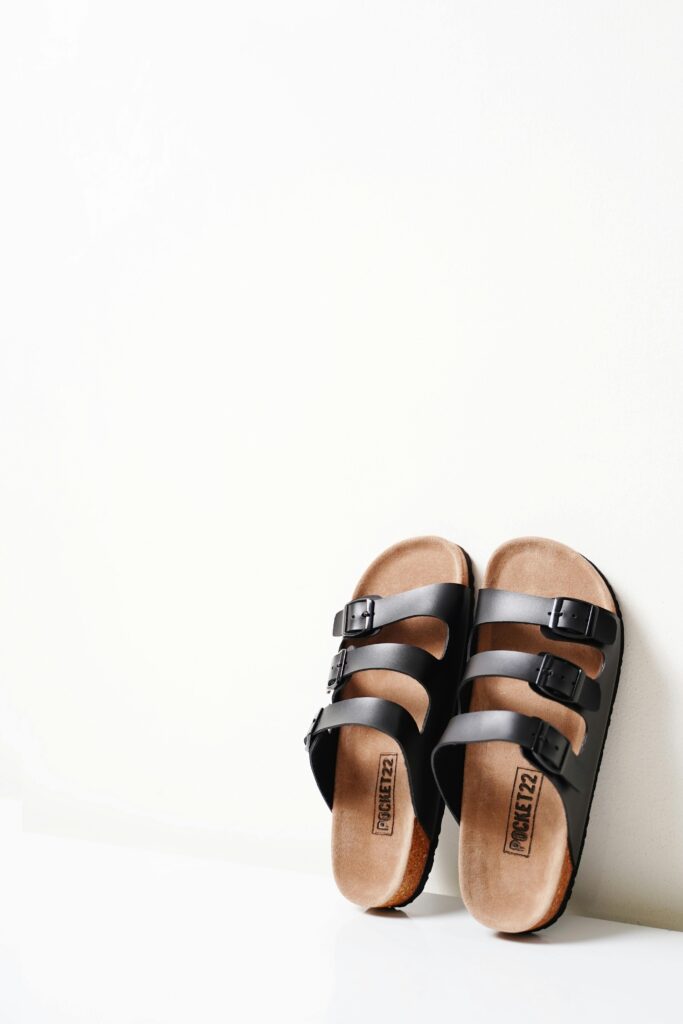
The foundation of every Birkenstock sandal lies in its meticulously crafted footbed, which comprises several critical elements designed to promote foot health and comfort:
- Cork Footbed: Natural cork is at the core of the Birkenstock footbed. Sustainably harvested, cork is lightweight, flexible, and known for its ability to mold to the unique shape of the wearer’s foot over time. This feature provides a personalized fit and even weight distribution, contributing to enhanced comfort and support.
- Suede/Nubuck Leather Lining: The top layer of the footbed is lined with suede or nubuck leather. This material is soft against the skin and helps to absorb moisture, keeping feet cool and dry even during extended wear. The luxurious feel of the suede enhances overall comfort and adds a touch of elegance to the sandals.
- Latex Foam Cushioning: Beneath the suede lining, a layer of latex foam offers additional cushioning and shock absorption. This cushioning layer enhances comfort and reduces impact on the feet and joints, making Birkenstock sandals suitable for all-day wear.
- Deep Heel Cup: One of the defining features of Birkenstock footbeds is the deep heel cup. This cup cradles the heel and provides stability, preventing excess movement and promoting natural foot alignment. The deep cup helps distribute body weight evenly across the footbed by supporting the heel, reducing strain and fatigue.
- Arch Support: Birkenstock footbeds are equipped with anatomically shaped arch support. This support structure mimics the foot’s natural contours, providing stability and promoting proper posture. It helps to alleviate common foot ailments such as plantar fasciitis and overpronation, ensuring optimal comfort and support with every step.
- Toe Grip: Positioned at the front of the footbed, a toe grip encourages natural gripping motion while walking. This feature improves circulation and enhances the foot’s natural rolling motion, contributing to stability and comfort during walking.
Choosing the Right Birkenstock Footbed
Birkenstock offers a variety of footbed options to cater to different preferences and foot types:
- Original Birkenstock Footbed: The classic footbed features a contoured shape with pronounced arch support and a deep heel cup. It is suitable for most foot types and supports daily wear.
- Soft Footbed: The soft footbed includes an additional foam cushioning layer between the suede lining and cork base. This option offers enhanced comfort and is particularly beneficial for wearers with sensitive feet or those seeking extra cushioning.
- Footbeds for Specific Needs: Birkenstock also offers specialized footbeds designed for specific purposes, such as the Birkenstock Blue Footbeds, which provide targeted support for high arches or flat feet.
Care and Maintenance Tips
Proper care and maintenance are essential to prolonging the life and performance of Birkenstock footbeds:
- Regular Cleaning: Clean the footbeds regularly using a soft brush or cloth to remove dirt and debris. Use a mild soap or Birkenstock cleaner, and avoid harsh chemicals that can damage the cork or leather.
- Air Dry Naturally: Allow your Birkenstocks to air dry at room temperature after cleaning. Avoid exposing them to direct sunlight or heat sources, which can cause the cork to dry out and crack.
- Store Properly: Store your Birkenstocks in a cool, dry place away from direct sunlight when not in use. This helps prevent mold and prolongs the sandals’ life.
- Replace When Necessary: The cork footbed may wear down or lose shape over time. Birkenstock offers replacement footbeds that allow you to refresh your sandals and maintain optimal comfort and support.
- https://www.youtube.com/watch?v=R4Ws4TxPqY0&pp=ygUaIGNsZWFuIEJpcmtlbnN0b2NrIGZvb3RiZWQ%3D
Additional Tips for Maintaining Your Birkenstocks
- Regular Cleaning: To keep your Birkenstocks in the best condition, clean the footbeds regularly. A light cleaning every few weeks can prevent dirt and oils from building up.
- Avoid Excessive Moisture: Avoid soaking the footbed or exposing your Birkenstocks to excessive moisture while cleaning. Water can damage the cork and leather materials.
- Use a Protective Spray: To help repel dirt and water, consider using a protective spray designed for leather or suede.
- Store Properly: When not in use, store your Birkenstocks in a cool, dry place away from direct sunlight to prevent fading and damage.
Preventive Care Tips to Extend Birkenstock Footbed Life
To extend the lifespan of Birkenstock footbeds, it is also important to adopt simple preventive care habits in daily use. Wearing socks during the initial break-in period or in warmer conditions can help reduce direct sweat absorption into the suede lining, slowing down odor and staining buildup.
Rotating your sandals instead of wearing the same pair every day allows the cork and leather components to recover and stay dry between uses. Additionally, avoiding rough outdoor surfaces such as wet grass or muddy ground helps protect the footbed texture and prevents premature wear. By combining regular cleaning with mindful usage, you can maintain both the comfort and original structure of Birkenstock footbeds for a much longer time.
CLEAN & PROTECT
The exposed cork edge of Birkenstock sandals and clogs is lightly sealed with cork sealer. This shields the cork and prevents it from drying out. If the cork appears to be drying out, use a thin layer of Birkenstock Cork Sealer to protect it from the weather.To keep your shoes looking new, use Birkenstock Cleaner & Refresher all over the footbed and a cloth to remove any extra moisture or dirt. Return the nap using a Nubuck/Suede brush on suede and Nubuck footbeds.
Advantages of Birkenstock Footbeds
The ergonomic design and high-quality materials used in Birkenstock footbeds offer numerous advantages to wearers:
- Customized Fit: As wearers use their Birkenstock sandals, the cork footbed gradually molds to the unique shape of their feet. This personalized fit enhances comfort and support, ensuring a snug yet breathable environment for the feet.
- Enhanced Comfort: The combination of natural cork, suede, and latex foam cushioning creates a supportive and cushioned footbed. This feature reduces pressure points and provides continuous comfort throughout the day, making Birkenstock sandals ideal for everyday wear.
- Foot Health Benefits: Birkenstock footbeds promote overall foot health by supporting natural foot alignment. The deep heel cup and arch support help to distribute body weight evenly, reducing strain on the feet, ankles, and lower back. This support structure can alleviate common foot ailments such as plantar fasciitis and overpronation.
- Breathability: Natural materials like cork and suede allow air circulation within the sandals, keeping feet cool and dry. Birkenstock footbeds’ breathable nature helps prevent moisture buildup and odor, enhancing overall comfort during warm weather.
- Durability: Crafted from high-quality materials, Birkenstock footbeds are designed to withstand daily wear and maintain shape over time. The robust construction of the cork base and suede lining ensures longevity, making Birkenstock sandals a worthwhile investment in comfort and style.
Disadvantages of Birkenstock Footbeds
Despite these potential drawbacks, many wearers find that the benefits of Birkenstock footbeds outweigh any perceived disadvantages. Here are some considerations to mitigate or address these concerns:
- Break-in Period: Give your Birkenstock sandals time to break in and mold to your feet. Wearing them for short periods initially and gradually increasing wear time can help alleviate discomfort during the break-in process.
- Arch Support: If you have sensitive arches or are new to significant arch support, consider trying Birkenstock’s soft footbed options, which provide a gentler cushioning experience while offering adequate support.
- Maintenance: Regularly clean and care for your Birkenstock sandals’ suede or nubuck leather lining to maintain their appearance and prolong their lifespan. Follow manufacturer recommendations for cleaning products and methods.
- Water Protection: Avoid wearing Birkenstock sandals in wet conditions or applying a waterproofing spray designed for suede or nubuck leather to minimize exposure to water and moisture.
- Cost-Effectiveness: While Birkenstock sandals may have a higher initial cost, their durability and comfort can make them a cost-effective investment in the long run. Consider the value of superior comfort and longevity when evaluating the price.
- Style Preferences: Explore Birkenstock’s range of styles and colors to find sandals that complement your wardrobe and personal style. Experiment with different models to discover which suits your aesthetic preferences and lifestyle needs best.
Conclusion
Properly cleaning and maintaining your Birkenstock footbeds ensures they remain comfortable and supportive for years. Following these detailed steps and using suitable materials can effectively remove dirt, stains, and odors without compromising the cork’s or suede’s integrity. Incorporate regular care into your routine to preserve the quality and comfort of your favorite Birkenstock sandals.
Apart from that if you want to know about “Elevate Your Space with Practical and Stylish Laundry Room Shelves: An Overview Of Its Types, Design Tips, And More” then please visit our “CLEANING” Category.
FAQs
After cleaning, gently brush the suede or nubuck leather with a soft brush to restore its texture. Apply a protective spray designed for suede or nubuck to help maintain its appearance.
Allow Birkenstock footbeds to air dry naturally after cleaning. Avoid using heat sources or direct sunlight, as excessive heat can cause the cork to dry out and crack. Drying time may vary based on humidity and airflow.
Darkening is caused by a buildup of sweat, oils, dirt, and bacteria over time, especially with frequent barefoot wear.
They should air-dry for at least 12 to 24 hours in a well-ventilated area away from direct sunlight or heat.
Odors can be reduced by cleaning the footbed thoroughly and allowing it to dry completely. Baking soda powder can also help absorb lingering smells when sprinkled lightly and brushed off later.