
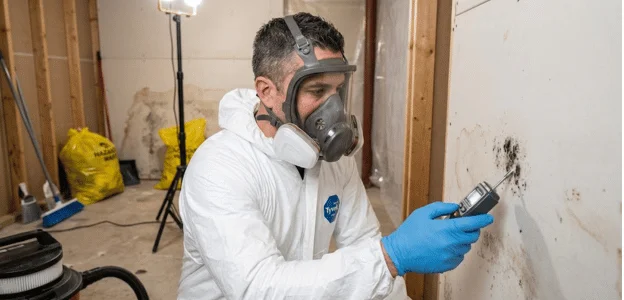
Finding mold in your home can raise immediate questions about safety, cleanup, cost, and whether you need a professional. Mold remediation focuses on removing contaminated materials while correcting the moisture problem that allowed growth. Small, accessible areas may be manageable for some homeowners, while larger problems, sewage-related damage, hidden growth, and HVAC contamination call for professional attention. Knowing what a proper cleanup involves can help you avoid cosmetic fixes that leave the underlying problem behind.
| Key question | Practical answer |
|---|---|
| What does remediation involve? | Finding the moisture source, controlling spread, cleaning or removing affected materials, drying the area, and checking the results |
| When may DIY cleanup be reasonable? | EPA says areas smaller than about 10 square feet can often be handled by homeowners who follow proper precautions |
| Is mold testing always needed? | No. EPA and CDC generally do not recommend routine testing when visible growth is already present |
| What does professional work cost? | Angi’s July 2026 data places many U.S. projects between $1,223 and $3,757, before major reconstruction |
| How long can the work take? | Small projects may take a few days; larger or hidden problems can require a week or longer |
| When should you call a professional? | Consider professional help for larger areas, extensive water damage, sewage, HVAC contamination, hidden growth, or household health concerns |
Direct answer: A successful mold cleanup does more than wipe away visible growth. It stops the moisture source, isolates contaminated areas when needed, removes or cleans affected materials, dries the space thoroughly, and confirms that visible growth and musty odors are gone before repairs are closed up.
Key Takeaways
- Moisture control is the most important part of preventing the problem from returning.
- EPA uses roughly 10 square feet as a practical dividing point for many residential DIY decisions.
- Porous materials such as drywall, ceiling tile, insulation, and carpet may need removal rather than surface cleaning.
- Routine air testing is usually unnecessary when mold is already visible.
- Professional contractors should provide a clear scope covering containment, removal, drying, cleanup, and the moisture source.
What Does Mold Remediation Mean?
Remediation is broader than simply spraying a stained wall or removing visible patches. The goal is to return the affected area to a normal condition while correcting the water or humidity issue that supported fungal growth. Because mold spores naturally exist indoors and outdoors, completely eliminating every spore from a house is neither realistic nor the objective.
The process also differs from a quick cosmetic repair because you may have to discard contaminated materials. EPA notes that porous materials such as carpet and ceiling tile can be difficult or impossible to clean fully once fungal growth penetrates them. Painting or caulking over an affected surface before cleaning and drying it can also cause ongoing problems.
How Mold Remediation Works: 7 Steps
A professional project should follow a logical sequence instead of starting with demolition or chemical treatment. The exact plan changes with the size of the affected area, the materials involved, and whether contamination has spread into hidden spaces. EPA guidance lists moisture correction, worker protection, containment, cleaning, material removal, and final evaluation as core parts of the process.
- Find the moisture source. The contractor looks for plumbing leaks, roof problems, condensation, flooding, drainage issues, or excess indoor humidity.
- Assess the affected area. Identify visible growth, water-damaged materials, musty odors, and likely hidden areas so the work can be properly scoped.
- Protect occupants and the work area. Crews use appropriate personal protective equipment and may isolate the affected space to reduce the movement of dust and spores.
- Remove materials that cannot be cleaned. Damaged drywall, insulation, carpet, ceiling tile, or other porous materials may need controlled removal and disposal.
- Clean materials that can be saved. Appropriate hard surfaces can often be cleaned with detergent and water, then fully dried.
- Dry the structure. Dehumidification, air movement, repairs, and moisture measurements help ensure the conditions that supported growth no longer remain.
- Evaluate the result. The moisture problem should be fixed, visible growth and musty odors should be gone, and the area should show no sign of renewed water damage.
DIY Cleanup vs. Professional Help
EPA’s guidance on cleaning up mold in your home says that if an affected area is less than about 10 square feet, roughly a 3-by-3-foot patch, homeowners can handle many cases themselves by following recommended precautions. That guidance is not a guarantee that every small problem is appropriate for DIY work. Hidden contamination, contaminated water, HVAC involvement, or personal health concerns can make professional help the better choice, regardless of visible size.
| Situation | DIY may be reasonable | Consider a professional |
|---|---|---|
| Small surface area under about 10 sq. ft. | Yes | Optional |
| More than about 10 sq. ft. | No | Yes |
| Significant water damage | No | Yes |
| Sewage or contaminated floodwater | No | Yes |
| Mold inside or near HVAC equipment | No | Yes |
| Hidden growth behind walls or ceilings | Usually no | Yes |
| Household member has major respiratory or immune concerns | Avoid exposure | Yes |
| Large amounts of porous material require removal | No | Yes |
Attics deserve special care because roof leaks, condensation, insulation, and limited ventilation can hide a much larger moisture problem than the visible patch suggests. Dream of DIY’s attic mold removal guide covers attic-specific causes, tools, prevention measures, and professional considerations. Treat the source first, because cleaning the surface without stopping roof or ventilation moisture creates ideal conditions for another outbreak.
What Does Professional Cleanup Cost in the U.S.?
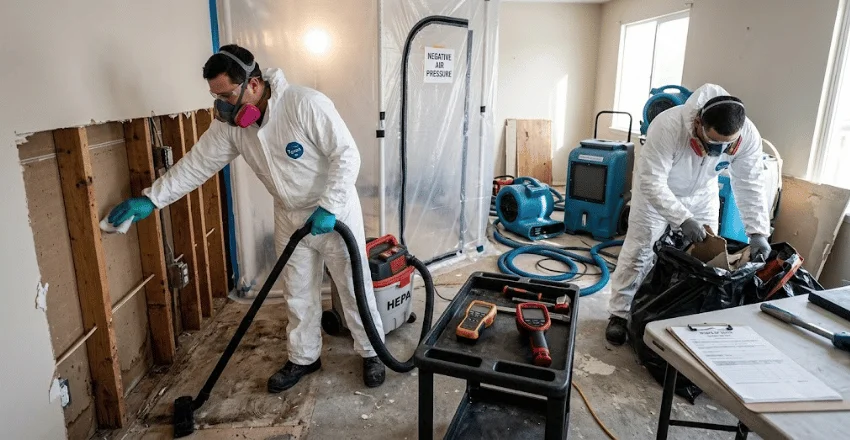
Pricing varies widely because a small bathroom wall and a multi-room project require different amounts of containment, demolition, drying, and reconstruction. Angi reported in July 2026 that many professional U.S. projects fall between $1,223 and $3,757, with an average near $2,368. Damage behind walls, inaccessible locations, HVAC involvement, extensive demolition, and replacement of building materials can push the final project cost much higher.
Ask contractors to separate remediation work from reconstruction when reviewing estimates. One proposal may cover containment and removal but exclude new drywall, paint, flooring, insulation, plumbing repairs, or roof work. Comparing written scopes line by line gives you a clearer picture than comparing the final price alone.
How Long Does the Process Take?
No single timeline fits every house because drying conditions and the amount of demolition can change the schedule. Current restoration-industry estimates commonly put smaller residential projects within several days, while larger projects can take longer than a week. Hidden contamination, extensive structural drying, HVAC issues, and reconstruction can further lengthen the project.
Before work begins, the cleanup crew should be able to explain which stages control your schedule. Removing visible materials may happen quickly, but drying the structure and checking moisture conditions can take longer. Rushing to install new drywall or finishes over damp framing can recreate the conditions that caused the original problem.
Do You Need Mold Testing Before Cleanup?
Routine sampling is usually unnecessary when visible growth is already present. EPA states that no federal limits for airborne mold or mold spores can be used to declare a home compliant with a health-based standard. CDC/NIOSH likewise says visual inspection and identifying damp or musty areas can often provide more useful information than short-term air sampling.
Testing can still have a role in certain complicated situations, especially when a qualified professional designs the sampling plan for a specific purpose. It should not replace finding the moisture source or removing damaged materials. Homeowners should also be cautious about paying for extensive species identification when the visible problem already needs correction regardless of its color or name.
Can You Stay Home During the Work?
Whether you remain in the house depends on where the work is happening, how much material will be disturbed, how effectively the area can be isolated, and who lives in the home. People with asthma, chronic respiratory disease, allergies, immune suppression, or other relevant health concerns should be especially careful about exposure during cleanup. CDC’s information on mold and your health advises vulnerable people not to participate in mold cleanup and recommends protective equipment for those doing the work.
Ask the contractor how they will contain the work zone and whether your HVAC system will remain operational. Dream of DIY’s guide to home HVAC performance explains how humidity, ventilation, ductwork, and hidden plumbing moisture can affect indoor conditions. If contamination involves the HVAC system itself, EPA advises against running it until the issue has been evaluated because it may distribute contamination through the building.
How Do You Know the Cleanup Worked?
A successful project should leave more than a freshly painted wall. EPA says the water or moisture problem should be completely corrected, visible growth and mold-damaged materials should be addressed, and moldy odors should no longer be present. The area should also remain free of renewed moisture damage when you check it again after the work.
Before accepting the final job, inspect the repaired area and ask how they resolved the moisture source. Request documentation of any materials removed, drying performed, and repairs still required before reconstruction. If the original leak or condensation problem remains unexplained, consider the project unfinished even if the affected surface looks clean.
Preventing Mold From Returning
Prevention starts by keeping building materials dry rather than relying on repeated chemical treatments. Repair roof and plumbing leaks promptly, ventilate moisture-producing rooms, control indoor humidity, and dry water-damaged materials as quickly as practical. CDC recommends drying a flooded home fully and quickly, generally within 24 to 48 hours, because prolonged dampness supports new growth.
Roof maintenance can also help prevent moisture from reaching attics, ceilings, and wall cavities. Dream of DIY’s roof-cleaning and maintenance guide explains how trapped debris and moisture can contribute to roof deterioration and leaks. After any cleanup, continue checking the original problem area during wet weather or periods of high indoor humidity so you can catch recurring moisture early.
How to Choose a Qualified Remediation Contractor
The EPA does not operate a federal certification program for mold inspectors or remediation companies, and requirements can differ by state. Homeowners should ask about training, experience, professional guidelines, references, insurance, and the company’s planned approach to moisture correction and containment. A written scope should explain what will be removed, what will be cleaned, how the area will be dried, and how the crew will prevent contamination from spreading.
Be cautious if a contractor promises to make a home completely “mold-free,” recommends major work without explaining the moisture source, or proposes painting over damaged surfaces. Ask two or three qualified companies to describe their scopes when the project is expensive or extensive. Comparable written plans make it easier to identify missing steps and understand why prices differ.
Frequently Asked Questions
How long does mold remediation take?
A small, contained residential project may take only a few days, while larger jobs can require a week or longer. Drying, hidden damage, HVAC contamination, and reconstruction often affect the schedule more than the visible patch itself. Your contractor should provide a project-specific sequence and explain what must happen before the area can be rebuilt.
Can I use bleach to clean mold?
CDC says household bleach can be used on some surfaces when used according to its safety instructions, but bleach is not a substitute for fixing the water problem. Never mix bleach with ammonia or other cleaners because it can form dangerous gas. Ventilation, gloves, eye protection, and proper respiratory protection are also important when cleanup exposes you to mold or cleaning chemicals.
Is black mold automatically more dangerous than other mold?
Color alone does not tell you how dangerous an indoor fungal growth is. CDC states that molds capable of producing mycotoxins should be treated with the same basic concern as other indoor growth because any building mold signals an unwanted moisture problem. Focus on correcting the moisture and removing the affected material rather than trying to identify risk from color alone.
Will mold come back after professional cleanup?
It can return if water intrusion, condensation, excess humidity, or another moisture source remains. A strong project therefore treats both the contaminated materials and the building condition that allowed them to stay damp. After heavy rain, plumbing repairs, or seasonal humidity changes, continued inspections can help you spot a recurrence before it spreads.
Make the Moisture Fix Part of the Cleanup
Cleaning visible growth is only half the job if your house remains damp. Identify the source, choose DIY work only when the scope and conditions make it reasonable, and bring in a qualified professional when contamination is extensive or complicated. A clear plan for containment, material removal, drying, repair, and prevention gives you a much better chance of solving the problem once instead of paying to solve it again.